How Good Is The Canon R6 MKI Compared To The Canon R3
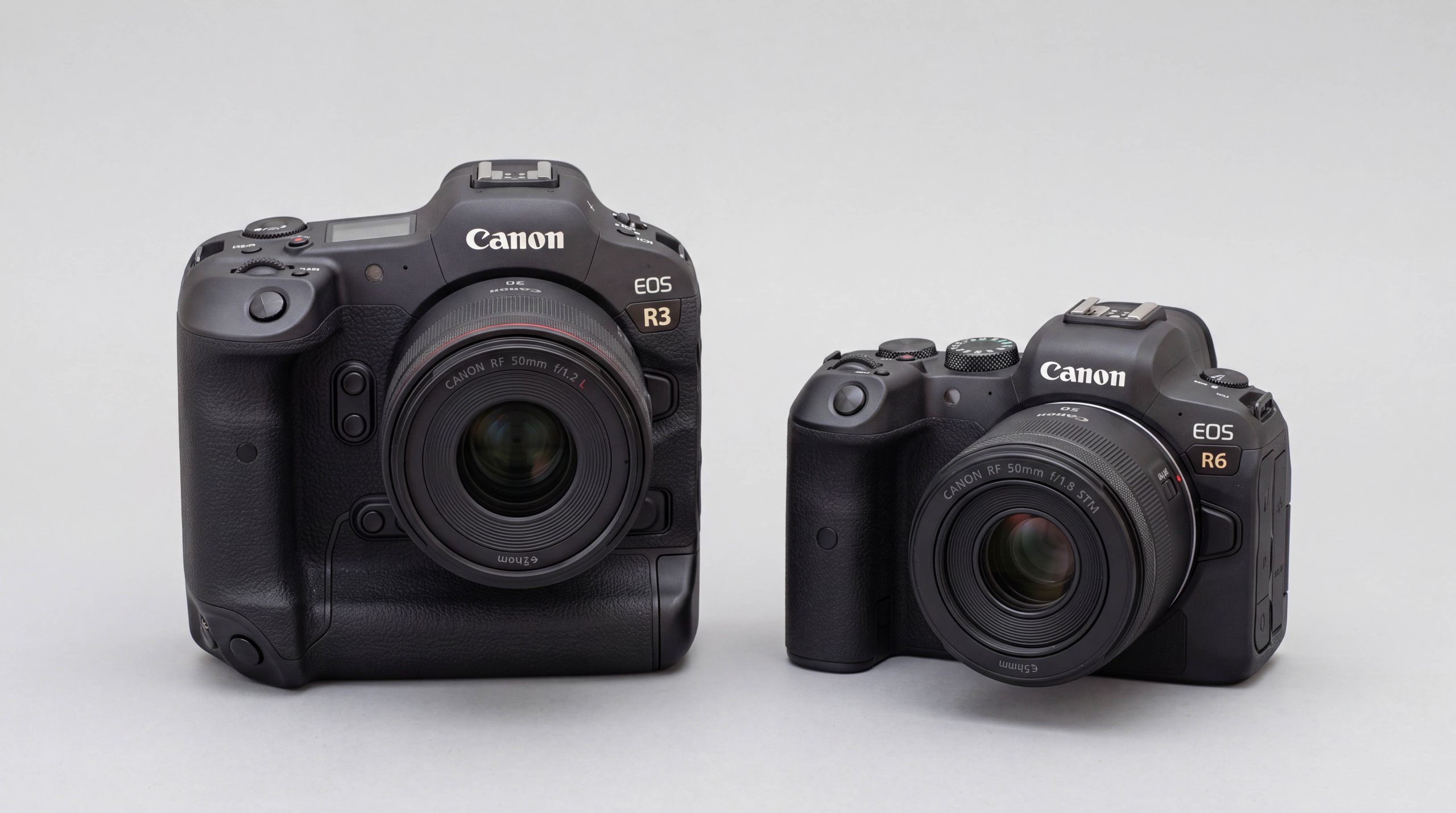
Hi and welcome back to my website. In this video I thought I take the opportunity to try and show if the original Mark 1 R6 is still good enough for professional sports.
I’m going to compare it in real world situations with the more recent R3 camera. Both are extremely powerful and capable cameras with a lot of features including the insanely good auto focusing and high speed shooting.
The R6 Mark 1 was released in July 2020 with the Mark 2 released in November 2022. Two years is not a lot of time between new versions of cameras but I think Canon wanted to push out new features and updated sensors. The Mark 3 is now available with even better features and performance.
So I’ve had this camera since around early 2021. It hasn’t been my first choice. I’ve used the R5 a lot more and more recently the R3 has taken over a bit. But more recently in the last year I’ve actually started to use this camera way more than usual, despite the relatively low megapixels.
But if you’re new to sports and actions based photography is the R6 MK 1 still a good option considering this camera is available in pre-owned or refurbished condition for less than half the price of the new MK3 version.
In my opinion it’s an absolute bargain because you’re buying a camera that’s comparable to the 1DX MK3. That was Canon’s last flagship DSLR camera released in January 2020. So the R6 MK1 kind of punches above its weight especially with the release of the new auto focus system found it Canon’s more recent mirrorless cameras.
The R3 is also a great camera but has never been officially branded as a flagship camera even though it looks and feels like a pro flagship camera.
The main difference apart from the size, weight, ergonomic and functionality is the image sensor. The R6 Mk1 has a 20mp sensor compared to the R3 with a 24mp sensor.
The R3 can shoot at 30fps with the Electronic shutter and 15fps with the Mechanical shutters.
The R6 MK1 can shoot 20fps with the Electronic shutter and 12fps with the Mechanical shutters.
The R6 MK2 is actually capable of shooting at 40fps with the Electronic shutter and 12fps with the Mechanical shutters.
There are a lot of other features found in both cameras that function slightly differently which is what you’d expect from a pro camera and a pro-consumer camera. The R3 has a load of extra stuff mostly for sports and photos journalists in mind such as voice recording, ethernet ports and FTP image transfer etc.
But do you really need a pro camera like the R3 or even the R1 when the R6 still performs more than well enough for most professional sports and action situations.
Let’s test them out!
Firstly, I’m going to look at their overall performance and image quality. I’d say 95% of the time this is what most people would be looking at when choosing which camera to purchase.
The R3 and R6 share the same auto focusing system but the R3 is a more recent camera so there may be some improvements.
I’ve set both camera’s up with identical settings and have used them on the same lens.
Here’s a side by side comparison in a real world situation of their auto focusing capabilities.
The R3 does feel so much better with the larger grip and body, especially when shooting for hours. It is slightly heavier at 1015g compared to 680g but when used with a monopod you’ll most likely not really notice. What I really notice however, is how much my hand starts to hurt when using the R6 for a long period of time compared to the R3. The Canon LP-E19 battery in the R3 is also much larger and lasts longer than the LP-E6NH in the R6.
Let’s look at Image quality. The R6 shoots at 20mp compared to 24mp. It is nice having a few extra pixels but in reality there’s really not a lot difference between the two. Both handle low light situations extremely well and produce great looking photos.
R6 has a 20.1-megapixel full-frame CMOS sensor thats shares some technology from the EOS 1DX MK3.
The EOS R3 is the first EOS series camera to feature an entirely new 24.1MP full-frame, back-illuminated, stacked CMOS sensor.
This technological foundation delivers several critical benefits for professional sports and wildlife photographers:
Extremely Low Rolling Shutter: The fast readout virtually eliminates the distortion that often plagues electronic shutters when photographing fast-moving subjects.
30 fps Blackout-Free Shooting: It allows high-speed continuous shooting (30 frames per second) with full autofocus and autoexposure tracking, without the viewfinder going dark.
Superior Low-Light Performance: The back-illuminated (BSI) structure increases light-gathering efficiency, producing cleaner, less noisy images at high ISO settings.
Electronic Shutter with Flash: For the first time on a Canon camera, the electronic shutter can be used with external flash units.
Fast Sensor Scan Rate: This enables flash synchronisation with the electronic shutter up to 1/180 sec and allows for a maximum shutter speed of 1/64,000 sec.
So there are some serious real world benefits with the sensor on the R3 compared to the R6. But if you’re just starting out an old R6 camera will most likely be more than good enough to begin with.
The image buffer is another really important feature that can often go unnoticed when testing out cameras. This is for when you’re shooting in burst mode or high speed mode. As I mentioned earlier the R3 can shoot at 30fps and the R6 at 20fps with the electronic shutter. Usually, I’m shooting with the electronic first curtain mode which gives me 15fps with the R3 and 12fps with the R6.
I personally find for the majority of subjects and situations 12fps is more than enough. There may be the occasional situation when I’d switch to the electronic shutter.
The reason is I need to work fast and having less frames per second means less photos to scroll back through when making my selection. It also means less data is being captured and less file space is being used. I’ve never really had a situation where I’ve thought I would have been better off using the electronic shutter, although I do for certain things that may require a faster frame rate.
The overall benefit of using the electronic first curtain or mechanical shutters out weighs the extra fps.
I’ve tested the R3 buffer compared to the R6 using electronic first curtain. Both cameras can shoot continuously for quite a while. The R6 does start to run out of speed after 30 seconds alt 12fps. The R3 at 15fps just keeps going. I’m sure it’s possible to fill the buffer at some point but you’ll most likely run out of space on your memory cards. The R3 is simply a high performance workhorse. A sports photographers dream camera.
However, is 24mp enough? The R6 is only 20mp and for many years both Nikon and Canon’s flagship DSLR cameras for all 20mp.
I think for optimal performance, speed and low light image quality 20mp seemed to be the sweet spot for DSLR cameras. For mirrorless cameras it looks like 24mp is the sweet spot for performance and image quality.
As mentioned both camera are more than capable of recording great photos but for me I’d like to see a higher megapixel sensor on a pro body. At least having the option of a 24mp pro camera or a 45-50mp pro camera. Let the professional decide what they want and let them figure out how to use it in the best way possible.
Another feature found in both cameras is the Anti Flicker mode. This advanced anti-flicker shooting mode helps to reduce exposure and color inconsistencies under artificial lighting.
For example working under floodlights in a small stadium can produce some exposure and colour inconsistencies when shooting with the high frame burst mode. The R3 camera allows the Anti flicker mode tone used with all three shutter options, while the R6 is limited to mechanical and Electronic First Curtain. This is most likely possible because of the back-illuminated, stacked CMOS sensor on the R3.
This is not a huge deal breaker to be honest. If there are situations where the lights are causing issues then any photo is still better than no photos at all. The R6 still performs well in extreme situations but the R3 just has that little bit extra.
When looking through the menu screen on both cameras there are some differences.
The R3 has extra options within the Auto Focus section such as Subject Tracking and Switching Tracked Subjects.It also has Register people priority where you can load a photograph of someone and the camera will prioritise that person. For example, Lionel Messi at Inter Miami, maybe you’re like every other photographer and you just want shoot Lionel Messi and intent to track his every move for 90 minutes. That when this might come in useful.
For the most part it’s not a deal breaker if you don’t have it.
There are a lot of extra Network settings and options than compared to the R6. This is to be expected from a pro level camera with an ethernet port built in. If you need to get photos from the side of a stadium to an editing team really quickly then you have the option to use ftp or wireless transfer straight from the camera.
The R6 has significantly less options. Generally I work by transferring files from the camera to laptop and then I send via ftp from the laptop. So therefore, this is not really a huge issue for me and doesn’t affect my overall workflow.
Another major addition the R3 has is the inclusion of the Eye control focusing. This feature is a modernised, highly refined revival of technology Canon first introduced in the 1990s.
It does seem like a bit of a gimmick but I can work quite well if calibrated properly. Personally, I’ve never used it for professional sports as I find the eye tracking auto focus works so well. It’s not really practical to start testing out technology when it really matters, especially when other technology already works more than well enough.
So again, this is not really that much of a deal breaker when considering the R3 or R6 for pro level sports.
It’s just not something that’s really worth using and certainly won’t help you take better photos.
Another major difference is the EVF electronic view finder.
The Canon EOS R6 features a 0.5-inch 3.69 million-dot OLED electronic viewfinder (EVF) with a Selectable refresh rate of 60 fps (default) or 120 fps for smoother tracking.
The Canon EOS R3 features a 0.5-inch color 5.76-million-dot OLED Electronic Viewfinder (EVF) with a 120 fps refresh rate, designed to provide a bright, high-resolution, and blackout-free experience.
When I compare the two I can definitely see that the R3 EVF is much better. The colours look more accurate and it seems brighter. It’s almost like looking at an LED tv display.
There are also some additional buttons and functions on the R3 which are quite nice to use. The smart controlled for example is a good feature but I actually have it turned off because I don’t find it to be very precise for the work I need to do.
So basically the R6 camera has everything you need to get started with shooting pro sports, action photography and even wildlife. The R3 is little more expensive but it does have a lot of extra technological features, that actually won’t really help you get better photos.
In fact I’d be tempted to sell the R3, keep the R6 Mk1 and invest in the new R6 MK3 camera even though the R3 has a better sensor.
However the R6 MK3 does have the upgraded Dual Pixel CMOS auto focus II sensor.
I’d actually prefer The 32.5mp sensor on the R6 Mk3 for sports and wildlife, which also has the pre-burst feature, something that was omitted for the R3. I’d probably buy the extra grip for the R6 to make it more comfortable to hold like the R3.
Thanks for watching. I hope that’s helped in some way. Please give it a like and a share and also subscribe for more content.