Comparison Between Canon R3, R5 MK1 and R6 MK1 – Which One Should You Choose?
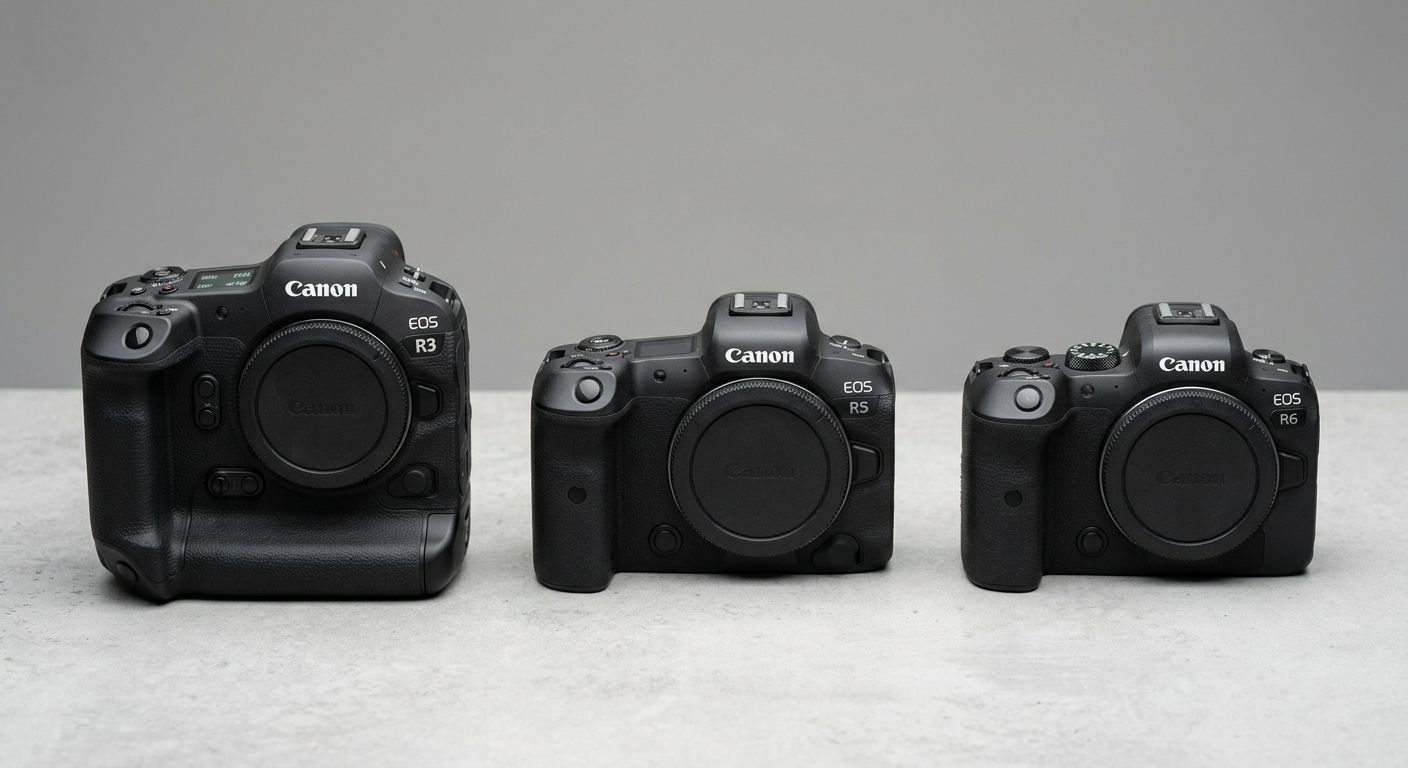
Hi and welcome back to my website! In this video I thought I take the opportunity to try and show the difference in performance and overall quality between the R6 MkI, R5 MKI and the Canon R3 mirrorless cameras, primarily for sports, action and wildlife photography.
They are all very similar as they share the same Dual Pixel CMOS AF II auto focusing system, sensor technology and Digic X image processors. They are also very difference in terms of pixel resolutions, burst rates, ergonomics and functionality. The R6 camera has a 20mp full-frame CMOS sensor comparable to the 1DX MK3. The R5 has a newly developed high-resolution 45-megapixel full-frame CMOS sensor. The R3 has a 24.1MP back-illuminated stacked CMOS sensor, the first EOS series camera to feature this entirely new type of image sensor, generally received for the more high end or professional level cameras.
This technological foundation delivers several critical benefits for professional sports and wildlife photographers:
- Extremely Low Rolling Shutter: The fast readout virtually eliminates the distortion that often plagues electronic shutters when photographing fast-moving subjects.
- 30 fps Blackout-Free Shooting: It allows high-speed continuous shooting (30 frames per second) with full autofocus and autoexposure tracking, without the viewfinder going dark.
- Superior Low-Light Performance: The back-illuminated (BSI) structure increases light-gathering efficiency, producing cleaner, less noisy images at high ISO settings.
- Electronic Shutter with Flash: For the first time on a Canon camera, the electronic shutter can be used with external flash units.
- Fast Sensor Scan Rate: This enables flash synchronisation with the electronic shutter up to 1/180 sec and allows for a maximum shutter speed of 1/64,000 sec.
So there are some serious real world benefits with the sensor on the R3 compared to the R5 or R6. But if you’re just starting out with an old R6 or R5 camera it will be more than good enough.
- The R6 supports continuous shooting up to 20 fps (electronic) and 12 fps (mechanical).
- The R5 supports continuous shooting up to 20 fps (electronic) and 12 fps (mechanical).
- The R3 supports continuous shooting up to 30 fps (electronic) and 12 fps (mechanical).
The image buffer is another really important feature that can often go unnoticed when testing out cameras. This is for when you’re shooting in burst mode or high speed mode. As I mentioned earlier the R3 can shoot at 30fps and the R5 and R6 cameras at 20fps with the electronic shutter. Usually, I’m shooting with the electronic first curtain mode which gives me 12fps with the R3, R5 and R6.
I personally find for the majority of subjects and situations 12fps is more than enough. There may be the occasional situation when I’d switch to the electronic shutter.
The reason for using mechanical or electronic first curtain shutter is because I need to work fast and having less frames per second means less photos to scroll back through when making my selection.
It also means less data is being captured and less file space is being used. I’ve never really had a situation where I’ve thought I would have been better off using the electronic shutter, although I do for certain things that may require a faster frame rate.
The overall benefit of using the electronic first curtain or mechanical shutters out weighs the extra fps.
I’ve tested the buffer rate on all three cameras using the mechanical shutter and electronic shutter while writing to the dual card slots.
I’ve set all three cameras with the same settings suing the RF100-500 lens and also the same memory cards. I’m using the SanDisk extreme pro CFexpress card with the R3 and R5 for CRAW capture and the SanDisk extreme pro SD Cards for CRAW on the R6 and high quality JPEG on the R3, R5 and R6.
It’s virtually impossible to out run the buffer using the mechanical shutter at 12fps on the R3. The camera just never seems to run out of processing power. The R3 with the electronic shutter at 30fps does run out of steam after a short while.
With R5 the mechanical shutter is almost impossible to our run but it does temporarily slow down or stop for a very short while and then starts again.
The R5 with the electronic shutter is similar to the R3. It has a decent burst mode but will start to stutter or stop after 15-20 seconds but then will start again once the buffer has cleared.
The R6 is still very good with the mechanical shutter but has noticeably less performance than compared to the R5 or R3. The buffer fills much quicker causing the camera to stutter or stop for short moments.
The R6 with the electronic shutter has a similar burst rate as the R5 but it does start to slow down quicker and stutters or stops completely before starting again once the buffer has cleared.
In a real world situation is any of this actually going to matter that much. I’d say In 95% of the time or even more than that the extreme burst mode of these cameras isn’t going to matter that much.
I’m hardly ever in situations when I’m shooting continuously for more than 5-10 seconds, even then it’s not that often.
When looking at these real world situations you can see the burst mode of the camera is only activated temporarily to capture the shots required.
The rest of the time is spent composing, positioning and waiting for the right moment. You could easily adopt and spray and pray type of technique where you just lock focus on the subject and continually press the shutter in burst mode and hope for the best.
Sometimes it may work but working quickly to recompose and re-position the camera’s focus point is probably a better way to work.
All off these cameras work unbelievably well. They are all quick to focus using the Dual Pixel CMOS AF II auto focusing system, the speed of the burst mode using electronic first curtain and mechanical shutter is actually the same at 12fps. It’s only when the shutter has been activated beyond around 30-45 seconds is when there seems to be a difference in the buffer capacity between the three cameras. Like I mentioned there aren’t many situations when you’re likely to activated the shutter continuously for such a long time. But it’s good to know that you can do that for when the situation requires it.
That’s where the R3 really stands out. It just has something extra compared to the R5 and R6, along with better functionality, ergonomics and network capabilities.
The image sensors on all three cameras are different and it’s probably the most defining factor when choosing which camera to use.
Personally I love the 45mp in the R5. I find this to be the most useful thing above all other features apart from the auto focusing. But it kind of works alongside the auto focusing technology as the focus points are built in to the sensor.
The Canon EOS R5 features an advanced Dual Pixel CMOS AF II system with 5,940 selectable focus areas covering roughly 100% of the frame. The AF system uses deep-learning AI for tracking, including eye/face detection and animal/vehicle tracking, with automatic selection or manual control via the joystick or screen.
This basically means that in a real world situation the R series cameras hardly ever misses their subject and if you’re struggling with the auto focus then just watch my other videos about how to set up your camera with dual back button focusing.
The Canon EOS R6 features a 20.1mp sensor with the same highly advanced Dual Pixel CMOS AF II system, offering up to 6,072 selectable autofocus positions for stills. It covers 100% of the frame horizontally and 90% vertically, utilising up to 1,053 zones in automatic selection.
The Canon EOS R3 features a 24.1mp sensor with the Dual Pixel CMOS AF II, offering 4,779 selectable AF positions for stills and 3,969 for video, covering 100% of the frame with up to 1,053 zones available in automatic selection mode.
So you can see they are quite similar in terms of technology. It’s really the amount of pixels that the camera is capable of recording that’s the real difference.
Like I mentioned I really like having the lager sensor for several reasons, and it’s probably why the R5 has been used way more than the other cameras, and it shows. My R5 looks beaten up, the EVF is damaged and the LCD display has some minor issues. But these cameras are tough, they are built to withstand extreme conditions.
The 45mp sensor allows me to crop in using the 1.6x mode in camera, maintaining a resolution of around 17mp or 5088×3392. This is great for when shooting football, cricket, rugby or any other field sports. It was incredibly useful at the Gold Coast surf event as well as at the BMX world championships and invaluable for all those wildlife photos of eagles and ospreys in flight.
Having those extra pixels mens higher resolution but also means those pixels are smaller and denser so things like noise and grain can be controlled better in post production. The 1.6x crop mode punches in on the image sensor so the auto focus points therefore become larger, which is worth considering when using the eye tracking AF system.
The R6 can be a struggle for most field sports but I do use it with the 15-35 or the 70-200 lens for when my subject is much closer.
20mp is not great when cropping in. The 5472×3648 drops to 7.7mp or 3408×2272 pixels using the 1.6x in camera crop mode.
The R3 is slightly better at 24mp. The full frame resolution is 6000×4000. In crop mode it drops to 9.3mp or 3744×2496 pixels.
But then saying that when I look back over the final edited images from the Gold Coast Pro Surf event there isn’t really that much difference in the overall image quality and the final resolution when applying my final post production edits. All the images are around 1900-3000 pixels on the long side.
But the R5 does generally maintain a slightly higher resolution but the overall image quality is better with the Canon R3.
Another additional feature built in to the R3 is the eye control auto focus.
This feature is a modernised, highly refined revival of technology Canon first introduced in the 1990s.
It does seem like a bit of a gimmick but I can work quite well if calibrated properly. Personally, I’ve never used it for professional sports as I find the eye tracking auto focus works so well. It’s not really practical to start testing out technology when it really matters, especially when other technology already works more than well enough.
So again, this is not really that much of a deal breaker when considering the R3, R5 or R6 for pro level sports, action or even wildlife.
It’s just not something that’s really worth using and certainly won’t help you take better photos.
Another major difference is the EVF electronic view finder.
The Canon EOS R6 features a 0.5-inch 3.69 million-dot OLED electronic viewfinder (EVF) with a Selectable refresh rate of 60 fps (default) or 120 fps for smoother tracking.
The Canon EOS R5 features a 5.76-million dot OLED electronic viewfinder (EVF) with a refresh rate of up to 119.88 fps in smooth mode, offering little to no lag for most users.
The Canon EOS R3 features a 0.5-inch color 5.76-million-dot OLED Electronic Viewfinder (EVF) with a 120 fps refresh rate, designed to provide a bright, high-resolution blackout-free experience, Enabling continuous shooting at up to 30fps without interrupting the view.
The R3 also has the option of using the OVF Simulation: A special setting that mimics the appearance of a DSLR optical viewfinder, providing higher dynamic range to mimic, rather than emulate, a natural, non-processed view.
When I compare the two I can definitely see that the EVF in the R3 is much better. The colours look more accurate and it seems brighter. It’s almost like looking at an LED tv display.
So to round things up because I don’t want this video to be 3 hours long.
The Image quality on the R3 is the best. It’s also way more powerful than the other two cameras, it’s easier to work with despite its bulky size and weight. The handling, ergonomics and extra features and functions make it feel like a pro flagship camera, which it is really, despite Canon never fully confirming this.
The Canon R5 has a larger sensor and more pixels but that doesn’t seem to make a huge impact on its over all speed and performance. The larger sensor helps when cropping in, produces amazing image quality, but probably not quite a good as the R3.
The R6 is great, produces brilliant photos, especially in low light situations but the smaller sensor struggles when cropping in as those larger pixels are far more noticeable and more challenging to edit with.
If you can find an old R6 in decent condition as pre-owned or refurbished you’re getting an absolute bargain. A pre-owned or refurbished R5 would also be a great purchase.
A second hand R5 can be bought for around $2200-2500. A second hand R6 can be purchased for around $1000-$1400.
A re-conditioned R3 camera can be found for as little as $3500-$4000. Which does seem like quite a lot but you’re essentially buying a professional level, unofficial, flagship camera with all the bells a whistles. Compare that to the new R1, which is around $6000-$6500 pre-owned or $6700-$7000 brand new.
If I had the money to invest in a new camera which one would I buy and why?
I’d almost certainly go for The R5 MKII having already used the R5 MKI for over 5 years now. I know what it can do, what the limitations are and the know the benefit of having a larger sensor.
What I’d really like to see is a higher megapixel sensor on a Canon pro body. At least having the option of a 24mp pro camera or a 45-50mp pro camera. Let the professional decide what they want and let them figure out how to use it in the best way possible.
The Canon R6 MKIII also really interests me with the new 32.5mp sensor and pre-burst mode. The R5 MKII also has pre-burst mode. These are actually useful features to have in real world situations so probably worth upgrading to. Especially when considering that the Lumix G9 from 2018 had a pre-burst mode, it’s now 2026 and Canon has finally developed this for its own mirrorless cameras.
However, if I had to choose only one camera to keep from all three featured in this video, it’ll probably have to be the R3. Despite all the things I’ve mentioned the overall image quality, ergonomics, functionality, network, connectivity and performance is what gets the job done when in extreme situations. For 90% of the time all three camera are fine and perform well but the R3 has the edge when it’s required.
I also find that I work so much better with the R3 despite its extra size and weight than compared to the R6 or R5.
In the end they are all great cameras and it’s really down to you as a photographer how you use your equipment. The best camera is the one that’s in your hand being used.
Thanks for watching. I hope that’s helped in some way. Please give it a like and a share and also subscribe for more content.