What I Would Avoid If Starting Photography in 2026
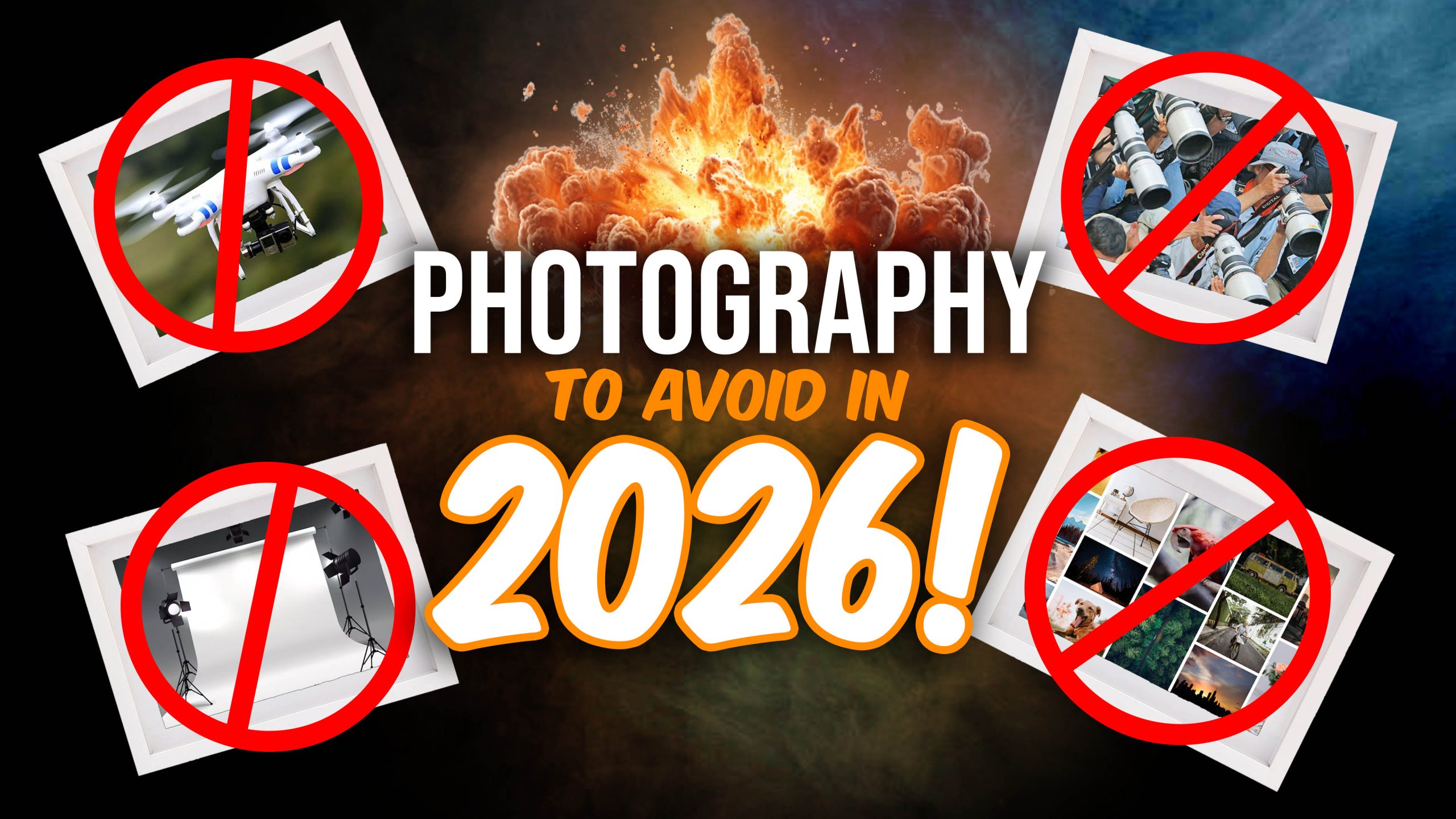
If I was new to photography or starting a photography business in 2026 there are several areas I’d concentrate on and a few that I really wouldn’t bother with, if I actually wanted too make money, and who doesn’t want to make money!
What I would concentrate on if I was starting out in photography in 2026.
Real Estate:
Low overheads, inexpensive gear and easy upsells such as floorpans, drone/aerial photography, 360 virtual tours, video content and content creations for socials such as reels and shorts.
Weddings:
Low overheads again. Decent camera and maybe two good lenses, a wide lens for group photos and 70-200mm is probably all thats required for a wedding day. Also, potential for upsells such as weddings albums, framed photos and prints. Good way to get yourself known in your local area for extra work such as family portraits, pet photography, lifestyle, head shots and other commercial photography.
Events, Conferences, Exhibitions and Corporate Functions:
Low overheads, maybe two to three lenses. A wide angle 16-35mm, a 70-200mm and perhaps a 50mm or 85mm. Quality of gear won’t matter. An old DSLR in used condition would still be perfectly fine for event photography. Most importantly having a set lenses and a technique that can help you differentiate yourself from the smartphone crowd. Offer something that the general person can’t do.
Content Creation:
Local businesses need content creators to create good quality material for their social media accounts. Instagram and Tik Tok Reels, Youtube Shorts, Facebook posts and online adverts. Every company now has a presence on social media. Therefore, a constant production of original content is required to help engage potential customers.
Editorial: If you live in an area or city and you find yourself consistently covering news worthy events or topics of public interest then submitting editorial content to micro stock sites such as Shutterstock and Alamy is definitely worth doing as a side hustle for extra income.
Editorial or documentary style content is still very much in demand as AI algorithms can’t replicate real world, breaking news, current affairs and sports events taking place daily.
Things I would avoid if I was starting out in photography in 2026.
Sports:
When people say gear doesn’t matter in photography, they’re not referring to sports photography. You’re not going to get very far and stand out as a photographer shooting sports events without a big telephoto lens. Those lenses are expensive, even the ones that are now 20-30 years old. I’m talking about 400mm f2.8, 500 or 600mm f4 lenses. Maybe a 300mm f2.8. Would you really spend $3000 on a thirty year old lens when, with the same money, you could buy, maybe not new but pre-owned, still in good condition, an 85mm f1.8, a 16-35 f2.8 or a 70-200 f2.8. Those are money makers, a 500mm f4 lens is not really a money maker.
It’s also a heavily saturated market and can be difficult to get accreditation for the major sports events. There’s a lot of people trying to do sports photography and very few actually making any money. It’s only the photographers woking for the main agencies such as Getty, Reuters, Associated Press and PA Media, to name a few, that are actually being paid. The rest are basically just submitting content for very small press agencies or for editorial stock libraries such as Shutterstock or Alamy. Sports photography simply doesn’t generate enough money to support all the photographers trying to establish themselves.
Also, it’s really only the big events that are likely to generate any sort of potential return on investment. Things like a cup final, or a play off, Super Bowl, major events like a tennis open championship, PGA tour, Lions Tour, Ashes, Olympic 100m final. If something memorable happens like a last minute goal, breaking a world record or an underdog wins a tournament then it’ll be headline news around the world. That’s where freelancers working for smaller agencies are likely to make decent money.
You still need to be extremely lucky to be in the right place at the right time to actually capture an internationally popular photo.
Sports photography is not something that will pay the bills or allow you to live the life you want. It’s better suited as something thats occasional rather than full time.
Drone photography: If you’re trying to establish yourself as a drone photographer, forget it. Owning a drone in 2026 is like owning a car. It’s not that amazing, and anyone can fly a drone anywhere. Ever since DJI released the mini series of drones, everyone and anyone is now flying a drone somewhere. It’s just not a viable business anymore, unless it’s part of a wider service such as real estate or content creation, then drone services alone aren’t really that in demand. If you’re using a drone to conduct surveys for site progress reports, 3d mapping, data capture, inspection or Photogrammetry/LiDAR, then it’s possible that you may make more commercial use from your drone. Probably a lot more than just a tool to capture images.
Stock Photography:
If you’re staring out in 2026 doing stock photography you’re going to make yourself bankrupt. Thats the sad reality of this once, reliable source of passive income. In recent years the royalties from the major stock media sites such as iStock and Shutterstock have almost collapsed. Shutterstock is now doing ok due to AI related data licensing payments, but in general payouts are now far lower than compared to 10-15 years ago. iStock/Getty now pays as little as 0.01c for a image download, that is literally as low as it can possibly get. Shutterstock pays out as little as 0.10c for most image downloads. The royalty rate largely depend on the client subscription. But in general the level of royalty payments has caused a lot of content contributors to close their accounts and focus on other ways to make money.
Studio:
Large overheads for gear and renting out studio space. Most studios generally cater for large and expensive photo shoots for product and branding and therefore, expect a certain level of experience. Very few agencies will employ anyone who’s straight out of university or has just bought their first camera. It’s possible to be hired as a studio assistant or a runner at a larger studio that might be shooting big advertising campaigns, or even as a photo retoucher or lighting coordinator. Being the main photographer might take quite a few years, in that time you’re more likely to make way more money doing weddings, real estate or content creation for small businesses.